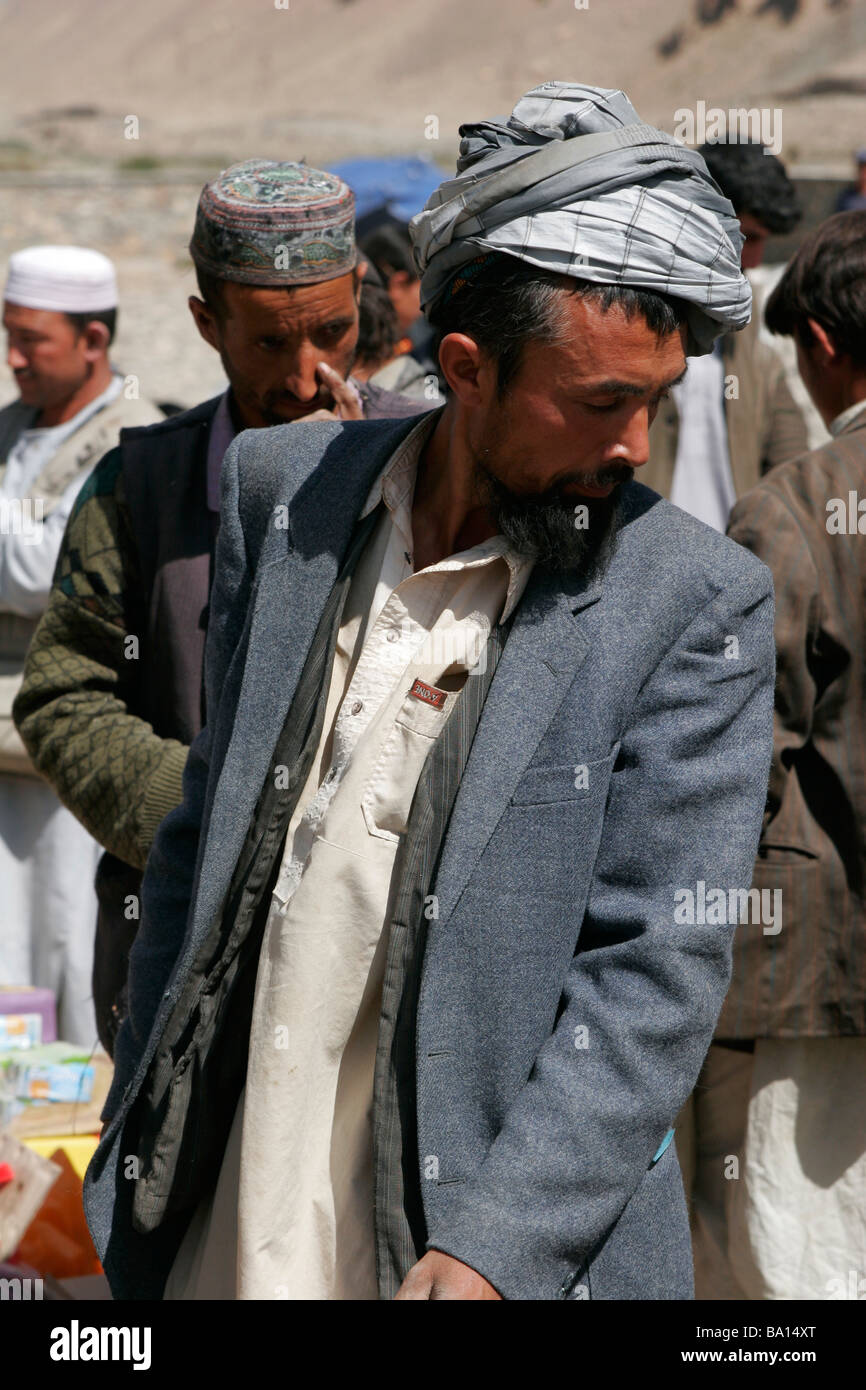
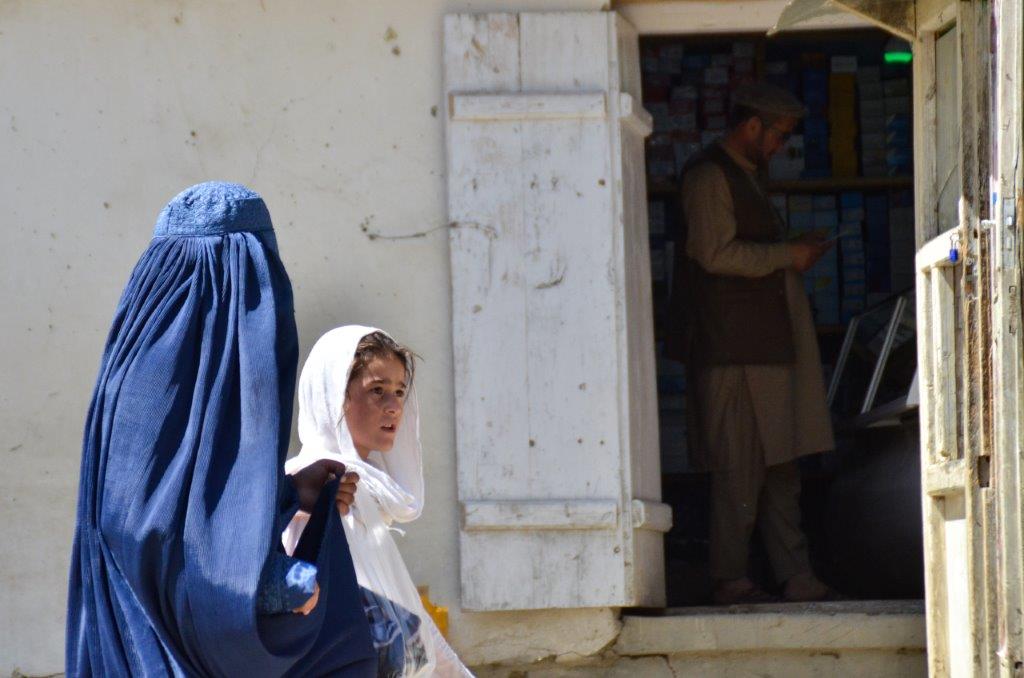
Ishkashim (Dari: اشکاشم; also transliterated Eshkashem or Ashkāsham) is a border town in Badakhshan province of Afghanistan, which has a population of around 12,120 people. The town serves as the capital of Ishkashim district. Another town by the same name is located on the other side of the Panj river in the Gorno-Badakhshan region of Tajikistan, although that town is normally transliterated Ishkoshim following Tajik practice. A bridge linking the two towns was reconstructed in 2006.
Ishkashim lies in a fertile valley at an elevation of 3,037 m (9,964 ft) meters. There are roughly 20 settlements in the valley, but considering the cultivation in the valley is contiguous, it could also be considered a single larger settlement. The valley has only one harvest per year. Wheat and barley are cultivated. Poplar, chinar and maple trees grow as well, but there is little firewood.
Ishkashim is connected by road with Fayzabad in the northwest, through the town of Baharak. It is also connected to the towns of Zebak in the southwest and Khandud in the northeast. The valley lies in an important strategic area, as it commands the only route between Fayzabad, Shighnan, and Wakhan accessible during the winter. It has a number of small shops, hotels, guest houses, schools and government buildings, including a base for the Afghan Border Police. Many local and foreign tourists visit the town.
History
Ishkashim and Wakhan became an Islamic region during the Samanid Empire. It fell to the Ghaznavids followed by the Ghurids and others. It officially became part of the modern state of Afghanistan after rulers of the Qing dynasty of China signed a treaty with Ahmad Shah Durrani, the founder of the last Afghan Empire. It was reshaped during the rule of Abdur Rahman Khan in the late 19th century after he agreed on the Durand Line with Mortimer Durand. Afghanistan as a whole became as a buffer state between what was then the Russian Empire and British India. It is currently controlled by forces of the Islamic Emirate of Afghanistan, which took over responsibility from the previous NATO-trained Afghan National Security Forces.
Climate
The climate is generally cold, but much warmer than that of neighboring areas, such as Wakhan District. According to the Köppen climate classification, Ishkashim has a warm-summer humid continental climate (Dsb) with pleasant summers and cold winters. The average annual temperature in Ishkashim is 4.3 °C (39.7 °F). About 569 mm (22.40 in) of precipitation falls annually.
Demographics
Dari is the dominant language in Ishkashim, Afghanistan. The people in the area are mostly Tajiks and Uzbeks. Many of them are unemployed. Historically, there have also been many followers of Nizari Isma'ilism in the area, who are called Ishkashimis. Some of whom may speak the Ishkashimi language in addition to Dari.
Economy
The entire population of Ishkashim is involved in agriculture, transport, trade, and tourism.
See also
- Sher Khan Bandar
- Valleys of Afghanistan
- Transport in Afghanistan
- Wakhjir Pass
References
External links
Media related to Ishkashim, Afghanistan at Wikimedia Commons
- اولین سفر به دهلیز واخان on YouTube (The first trip to Wakhan Corridor)
- Badakhsan Ishkashim, کابل تا بدخشان، گزارش ضیا، اشکاشم ۱۷ on YouTube (Kabul to Badakhshan, Report Zia, Ashkashim 17)
- "Ishkashim Border Crossing Between Tajikistan & Afghanistan". Nicole L. Smoot. Retrieved 2022-12-21.
- Satellite map at Maplandia.com
- "Eshkashem". Google Earth.